Custom Home Building & Remodeling
3D Printed Walls Are Going Up on Pine Street. Here's What Altadena Homeowners Should Actually Take Away
Concrete walls printed two inches at a time are rising on Pine Street. Here's what Altadena homeowners planning a rebuild should learn from it.
The Short Version
A 3D printed home and ADU are rising on Pine Street in Altadena, and while the technology is genuinely interesting, the real lesson for local homeowners is about material choices, honest budgeting, and a disciplined build process.
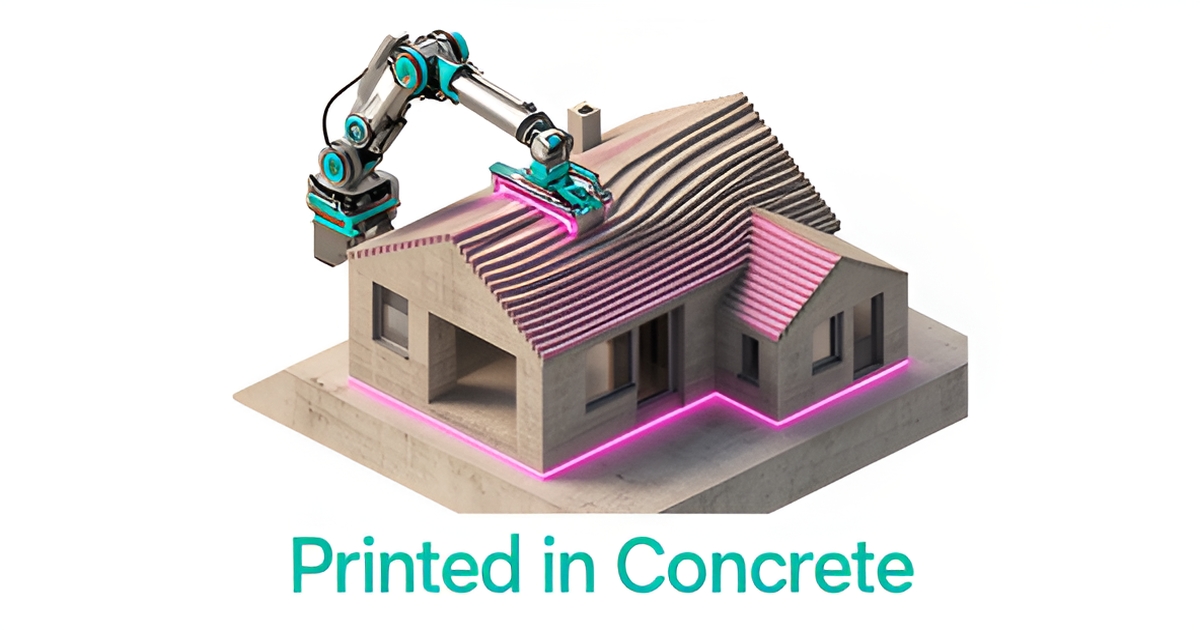
If you've driven down Pine Street lately, you may have noticed something that looks like it wandered off a movie set. A concrete 3D printer is building a house. Layer by layer, two inches at a time, it's extruding walls for a main residence and a detached ADU on a lot rebuilding after the Eaton Fire. The company behind it, Emergent Construction, expects the printing phase to finish within the next week or so, with the family moving in about six months after that. As someone who builds in Altadena every day, I've been watching this project with real interest. Not because 3D printing is going to replace how most of us build. Because it's telling us something important about what Altadena homeowners want right now.
What's Actually Being Built on Pine Street
Let's start with the specifics, because the details matter more than the novelty. The printer, supplied by a company called Willow 3D, lays down concrete in layers that are 2 inches tall and 2 inches wide. It repeats that pass over several days until the walls reach full height. The finished walls measure 11 inches thick, with rebar and concrete insulation filling the interior. That's a serious wall. Emergent's owner, Don Ajamian, has described the goal plainly: a structure that can take whatever the next disaster brings. People are calling it bunker-like, and the description fits. The project isn't a one-off experiment either. Emergent is under contract for six additional homes in the Altadena area. So this method is being tested at real scale, in a real market, with real homeowners signing real contracts.
Why Altadena Homeowners Are Asking for Something Other Than Wood
Here's the part I find most telling. According to the builders, a large share of post-fire clients are asking to rebuild without wood. That's a psychological shift as much as a technical one. Wood framing is fast, familiar, and cost-effective, and it remains the backbone of American residential construction. But after watching a fire take thousands of structures, homeowners think differently about combustible materials. Concrete doesn't burn. That's the whole pitch, and it's a legitimate one. There's a design angle too. The printer can produce curves and organic shapes that would cost a fortune to achieve with conventional framing. One neighbor, interiors professional William John Raitt, described the machine as looking like something out of science fiction, and admitted he's excited about the design possibilities. When the person watching from next door is thinking about how to use the technology, you know the idea has legs.
The Cost Question: Is It Actually Affordable?
The most surprising number in this story is the price. Emergent estimates the cost per square foot at roughly the same as a traditional wood-frame home. That runs against the common assumption that anything new and high-tech carries a premium. I'd treat that figure with some caution, though. Per-square-foot comparisons depend heavily on finishes, site conditions, and how much of the house the printer actually builds versus what still gets framed, plumbed, and wired conventionally. A 3D printed structure still needs a roof, windows, mechanical systems, and interior finishes, all installed by trades using familiar methods. What the number does tell you is that alternative construction methods have moved from experimental to competitive. If you're planning a rebuild or a custom home in Altadena, you owe it to yourself to understand the full cost picture of every structural approach before committing.
What 3D Printing Doesn't Change
Here's my honest take as a builder. The printing technology is impressive, but it changes one part of the job: the walls. Everything that determines whether a project succeeds still happens the same way. Someone has to assess the lot and the existing conditions. Someone has to align scope with a realistic budget. Someone has to navigate permitting, coordinate the design team, sequence the trades, and keep quality control honest through every phase. The Pine Street project makes this point without meaning to. The family moves in roughly six months after the walls finish, and that timeline reflects all the conventional work that follows the printing: systems, finishes, inspections, closeout. The printer builds for days. The process runs for months. That's true whether your walls are concrete, wood, or anything else.
How to Think About Your Own Rebuild
If you're an Altadena homeowner planning a ground-up home, a complete rebuild, a whole-home renovation, or an ADU, the Pine Street project is a useful prompt for three questions. First, what do you want your structure made of? Fire resistance is a reasonable priority in this community right now, and you have options: conventional framing with hardened details, concrete systems, steel, or hybrid approaches. Second, what's your realistic budget? High-end work in Altadena is a significant investment no matter the method, and you deserve straight numbers early. Third, who's running the process? Technology is a tool. The builder who sequences the work, communicates clearly, and holds the standard is what actually determines your experience. At JMB Builders, we walk through exactly these questions with Altadena clients every week: initial conversation, discovery and feasibility, pre-construction planning, permitting and preparation, construction management, and closeout. No shortcuts, no surprises.
Key Points
- Emergent Construction is 3D printing the primary walls and an ADU on Pine Street, with walls 11 inches thick and built from 2-inch layers of concrete extruded one at a time.
- The builder estimates the printing phase wraps within about a week, with the family moving in roughly six months after printing concludes.
- The reported cost is about the same per square foot as conventional wood framing, which undercuts the assumption that new tech always costs more.
- Post-fire demand has shifted: many Altadena homeowners now explicitly want non-combustible structures, and concrete delivers on that front.
- Whether you build with 3D printing or traditional methods, the deciding factor is the same: a structured process from first conversation through closeout.
I'm glad the 3D printed house is going up on Pine Street. Altadena's rebuild deserves bold ideas, and non-combustible construction is a conversation this community should be having out loud. But don't let the sci-fi visuals distract you from the fundamentals. The best outcomes, printed or framed, come from homeowners who start with an honest conversation about goals, budget, and fit. If you're planning a major project in Altadena, whether it's a rebuild, a custom home, a renovation, or an ADU, that first conversation costs nothing and commits you to nothing. Call us at (310) 491-6878. We're licensed, bonded, and insured, CSLB License #1103479, and we build only here, in Altadena, with total attention on one community.